
Chapter One
Between Britain and Nigeria
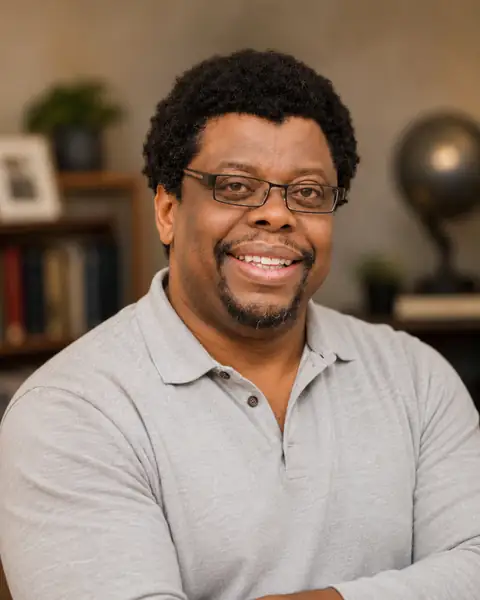
I was born in the United Kingdom to Nigerian parents. When I was three years old, my family returned to Nigeria, and Nigeria became the place in which much of my identity, values and early understanding of life were formed.
I grew up in Abeokuta and attended African Church Grammar School. Looking back, one of the most important lessons from that period did not come from a textbook. It came from failure.
It took me five attempts to obtain the combination of GCE results I needed. That detail matters because we often tell career stories backwards. Once somebody has accumulated qualifications, experience or professional credibility, we create a neat story in which their destination appears inevitable. Mine was not.
There were points at which the evidence available at the time could easily have suggested that I was not particularly academic or that certain opportunities were not meant for me. Fortunately, my story did not stop at the evidence available at that particular moment.
I kept going. Eventually, I progressed to Ogun State Polytechnic and Federal Polytechnic Ilaro, completing National and Higher National Diplomas in Marketing by 1990.
A person's present position is not necessarily a reliable prediction of their potential.
Sometimes development takes longer. Sometimes the pathway changes. Sometimes the person needs another attempt. And sometimes what looks like failure from the outside is simply an unfinished story.
Chapter Two
Returning to Britain — and Starting Again
At 22, I returned to the United Kingdom. I was crossing worlds again: British by birth, Nigerian by upbringing, and now learning how to build an adult professional life within a country that was both familiar and unfamiliar.
Marketing had given me an understanding of people, value and communication. But another interest was becoming increasingly important: information. How is it organised? How do people find what they need? How do systems make complexity usable? How do organisations move from disorder to structure?
That curiosity led me into Information Studies and eventually information systems. I completed postgraduate study in Information Studies at the University of North London and later an MSc in the Development and Application of Information Systems at De Montfort University.
My professional career moved into technology, information management and library systems. I worked with systems such as Dynix and took part in the transition of library environments from predominantly manual processes towards integrated digital information systems. At the University of Edinburgh, my work sat at the intersection of technology, information, physical environments and users.
At the time, I thought I was building information systems. Looking back, I was learning to ask broader questions:
- What is the architecture?
- Where does information enter, and where does it go?
- What depends on what?
- Where does the system break?
- Does it actually work for the human being who has to use it?
Those questions followed me throughout my career. Eventually, they moved from technology systems into human systems.
Chapter Three
When a Successful Career Is No Longer Enough
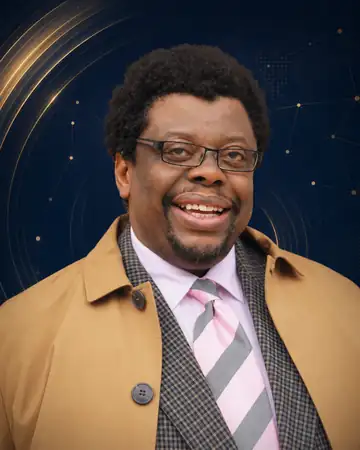
Career development is often described as progressing upwards. My experience has been different. Sometimes development requires going sideways. Sometimes backwards. Sometimes starting again. And sometimes life dismantles a version of your future before you have worked out what the next one should be.
There was a period in my life marked by significant personal and financial adversity. Relationships changed. Finances collapsed. There were experiences of isolation, instability and homelessness. I had to rebuild.
I do not include those experiences because difficulty automatically makes somebody wise. It does not. I include them because they changed the questions I was asking.
Until then, much of my professional life had been concerned with systems that processed information. I became increasingly interested in the systems through which people process life.
- What happens to judgement when somebody is overwhelmed?
- What happens to confidence after repeated setbacks?
- Why can highly capable people struggle to take the next step?
- Why does telling somebody what to do often fail to help them?
- What allows one person to adapt while another becomes stuck?
- What kind of support actually enables somebody to regain agency?
These were no longer academic questions. They were human ones — and increasingly, professional ones too.
Chapter Four
Moving From Systems to People
I wanted more direct human contact in my work, so I began moving from predominantly back-office systems roles towards frontline human development.
I trained in counselling skills. Between 2014 and 2016, I volunteered with ParentLine Scotland, supporting parents navigating difficult family situations. I also gained experience in community settings involving people affected by homelessness, addiction, disadvantage and reintegration following involvement with the criminal justice system.
These environments taught me something no technology system could have taught me on its own: a person's behaviour rarely tells you their entire story.
What looks like disengagement can sit beside fear. What looks like poor motivation can sit beside exhaustion. What looks like indecision can sit beside competing responsibilities. And what looks like a simple employment problem may involve confidence, identity, relationships, wellbeing, money, belonging and hope.
Yet I also became uncomfortable with approaches that unintentionally removed people's agency. I did not want to become another person telling somebody else how to live. I wanted to help people make sense of their own circumstances well enough to move forward themselves.
Support should strengthen agency, not replace it.
Chapter Five
Discovering Career Guidance
Eventually, I found the profession that brought many of these strands together: Career Guidance and Development.
Here was a discipline concerned not simply with finding somebody a job, but with helping people understand themselves, explore opportunities, evaluate information, develop capability and navigate transitions throughout life.
I completed postgraduate professional training in Career Guidance and Development, and something clicked.
I went on to work extensively across career development, education and employability, including work with young people, adults, schools, professionals, families and people navigating significant transitions. Over time, thousands of conversations accumulated — and I began noticing patterns.
Chapter Six
The Question Behind the Question
Somebody might arrive asking, “Which career should I choose?” But underneath that question might be:
Those questions led to one of my earliest structured frameworks: FOCUS.
Find Yourself
Understand who you are: strengths, interests, personality, values and the experiences that have shaped you.
Opportunities
Explore what is possible rather than prematurely narrowing your future.
Communication
Learn how to articulate what you know, what you can do and what you can contribute.
Use Information
Find, assess and apply information rather than becoming overwhelmed by it.
Starting
Turn reflection into a realistic next step.
FOCUS began as a career-development framework. But the underlying sequence worked beyond careers. The same person who needed to understand themselves before choosing a career also needed reflection before making other important decisions.
The problem was becoming larger than career choice.
Chapter Seven
From Giving Answers to Structuring Thinking
This became one of the most important shifts in my practice. My work was often described as coaching, but increasingly I realised that the most useful thing I could do was not provide somebody with more answers. It was to help create enough structure for them to examine their own situation properly.
People were surrounded by information: career information, advice, search engines, friends, family opinions, policies, professional expertise, social media and eventually artificial intelligence. Yet more information did not necessarily create better decisions. Sometimes it created more noise.
The problem was no longer simply how to give people more information. It was how to help people process information without losing their judgement.
That question would eventually change the direction of my work.
Chapter Eight
Building Frameworks From Repeated Human Problems
FOCUS was followed by further structured approaches. MAGIC explored motivation, agency and movement. Other frameworks developed around wellbeing, relationships, values, money, alignment, reflection, adaptability and sustained development.
At first, they appeared to address different problems. Over time, I recognised that they were connected.
Human beings do not divide themselves neatly into career, wellbeing, relationships, learning and decision-making. A financial problem can affect career judgement. A relationship problem can affect performance. Poor wellbeing can reduce cognitive capacity. An unclear sense of identity can affect career choice. Overload can affect communication. Values can affect decisions. Confidence affects action.
Everything interacts.
So the frameworks gradually became less like separate coaching tools and more like components within a larger architecture. I was returning to systems thinking — but this time, the system was human.
Chapter Nine
SCP — Bringing the Journey Together
SamSoyombo Career Pathways Ltd grew from this body of work.
People deserve better structures for understanding themselves, their opportunities and their next steps.
SCP is not built around the idea that one expert possesses everybody else's answers. It supports young people before major transitions, helps adults navigate career change, gives educators and youth professionals practical tools, supports communities, develops accessible resources and creates frameworks that encourage reflection rather than dependency.
Increasingly, it also builds technology that can scale structured support without removing human agency.
SCP became the practical home from which years of career-development experience, frameworks, resources and experimentation could be organised into something more coherent. But another transformation was already beginning.
Chapter Ten
Then AI Changed the Question Again
Artificial intelligence has dramatically increased access to information and generated advice. A person can ask an AI system almost anything. It can produce options, recommendations, analysis, career suggestions, CVs, strategies, plans and confident answers in seconds.
That is extraordinarily powerful. But it makes the question that had followed me throughout my career even more important:
What happens to human judgement when information becomes almost unlimited?
If people struggled to process information clearly before generative AI, simply multiplying the amount and speed of information cannot be the whole solution.
AI can help us think. But humans still have to interpret, weigh consequences, understand context, make judgements and remain accountable for many of the decisions that follow.
The technology changed. The human problem I had been observing for decades did not.
Chapter Eleven
Reflective Intelligence
I now describe the underlying field as Reflective Intelligence.
At its simplest, Reflective Intelligence concerns our capacity to create sufficient structure between information and action for human judgement to remain meaningful.
This is the intellectual thread connecting much of my life's work. The terminology came later. The observations came first: thirty-plus years around systems, thousands of human conversations, careers, education, community environments, families, technology, information, transitions, setbacks and rebuilding.
How do we help human beings think clearly enough to act wisely?
Chapter Twelve
From Reflection to Infrastructure
That question has evolved into the development of RILayer — Reflective Intelligence Infrastructure.
RILayer takes principles developed through years of structured reflective practice and examines how they can operate within contemporary organisations and AI-enabled environments.
The intention is not to make AI more human, nor to make humans behave like machines. It is to protect something increasingly important: the quality of human judgement between information and action.
Explore RILayer for organisations →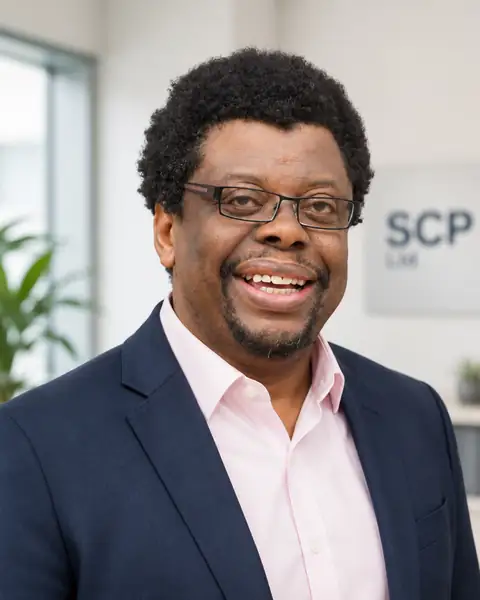
The Thread Through Everything
Looking back, the career makes sense.
If you had shown my 22-year-old self this career, I doubt he could have predicted it. Marketing seemed separate from information systems. Information systems seemed separate from counselling. Counselling seemed separate from career guidance. Career guidance seemed separate from artificial intelligence.
They were not separate. Each chapter added another piece.
Marketing taught me to understand value.
Information systems taught me to understand structure.
Technology taught me to understand scale.
Personal adversity taught me not to confuse somebody's present circumstances with their potential.
Community work taught me to understand context.
Counselling taught me to listen before interpreting.
Career guidance taught me to help people navigate rather than prescribe.
Coaching taught me the power of questions.
Framework development taught me to make thinking repeatable.
Thousands of conversations taught me to look for patterns.
Artificial intelligence made the importance of human judgement impossible to ignore.
Together, they shaped the work I am doing today.
Why I Share This Story
Your career does not have to make sense yet.
You may be starting, changing direction, returning after a setback, moving country, changing profession, questioning work that once fitted you, discovering abilities you did not know you had or wondering how apparently unrelated parts of your life could possibly belong together.
I cannot tell you where your journey will end, and I do not think anybody should pretend they can. But I can tell you this from experience:
Do not mistake a chapter for the whole story.
Five unsuccessful attempts did not determine mine. One qualification did not determine mine. One profession did not determine mine. One setback did not determine mine. One country did not determine mine. Even one definition of success did not determine mine.
The meaning often becomes clearer as the pieces accumulate. The task is not always to know the entire destination. Sometimes it is simply to understand yourself, understand what is in front of you, use the best information available and take the next responsible step — and then reflect again.
Understand before you choose. Reflect before you react. And never assume that where somebody is today tells you everything about where they can go tomorrow.
Where the Story Goes Next
Different pathways. One underlying concern.
The legal and organisational home behind the work.
Helping people develop clarity, capability and agency around career and life transitions.
A structured space for people to organise and articulate their own thinking without surrendering ownership of their evidence or decisions.
Developing wider public understanding and practice of Reflective Intelligence.
Developing Reflective Intelligence as infrastructure for organisations operating in complex and AI-enabled environments.
Different audiences. Different applications. One underlying concern: better human judgement before consequential action.
I am still building.
This is not the end of my career story, and I hope I never begin treating it as though it is. I remain a practitioner, a learner, a systems thinker, a career-development professional, a builder of frameworks and somebody still asking questions.
The work has become more ambitious, but the motivation remains simple: I want to help create systems in which people have a better chance of understanding themselves, interpreting their circumstances and making decisions they can genuinely own.
Because after all the technology, frameworks and terminology are removed, there is still a human being deciding: What do I do next?
That is where my work began. And that is still where it matters most.