


A Journey Towards Wholeness, Rooted in Global Wisdom
This article explores forgiveness as a transformative act of self-care that nurtures inner peace, boosts emotional resilience, and enhances career fulfilment. Drawing on the teachings of global spiritual traditions and positive psychology, it offers practical tools for integrating forgiveness into everyday life. Ultimately, it seeks to empower you to unlock your unique MaxME—the most authentic, purposeful version of yourself.
Learning Outcomes
By the end of this reflective journey, you will be able to:
- Understand the intrinsic connection between forgiveness and holistic wellbeing.
- Examine how unforgiveness undermines mental clarity, emotional intelligence, and career progression.
- Appreciate the role of forgiveness in major world faiths, supported by sacred texts.
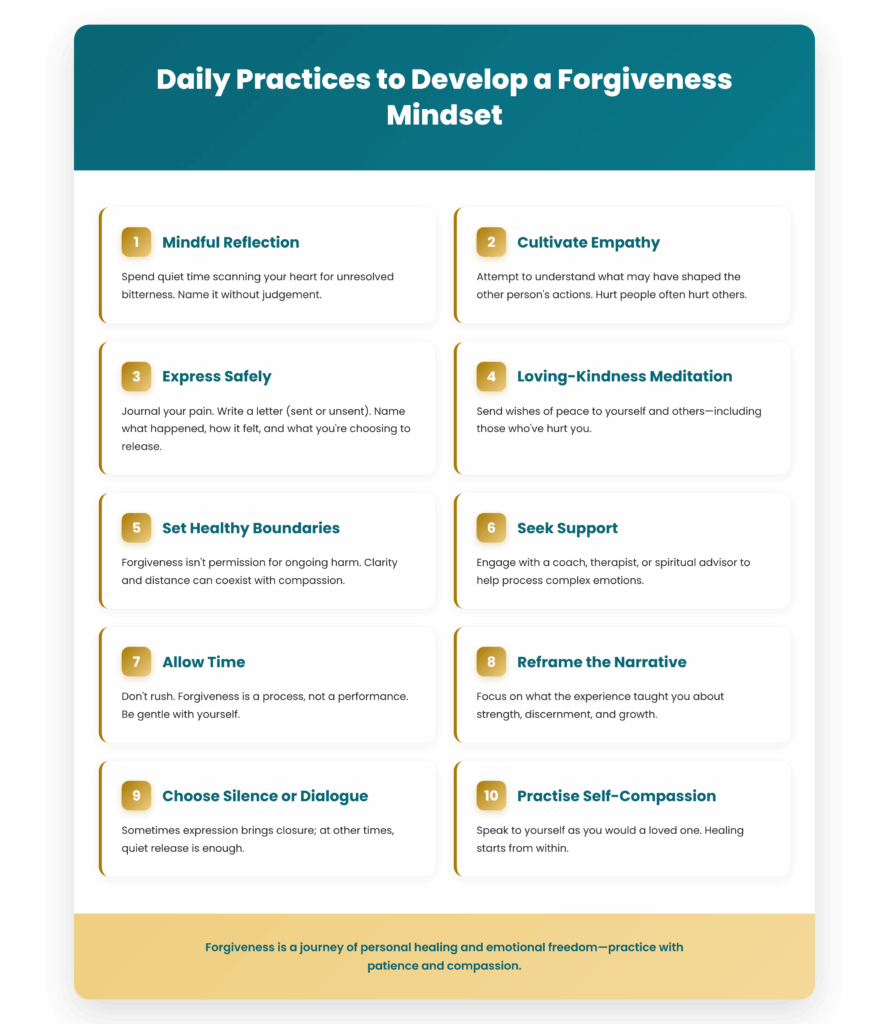
- Apply mindfulness-based and cognitive strategies to develop a forgiveness practice.
- Reflect on your own experiences with forgiveness, identifying areas for personal growth.
- Recognise how embracing forgiveness opens the door to resilience, empathy, and sustained success.
The Invisible Weight We Carry
Imagine silently bearing the emotional equivalent of a heavy rucksack—filled with old resentments, betrayals, and regrets. Over time, this invisible load affects the way we think, feel, and relate to others. It erodes our energy, dims our potential, and creates subtle barriers to joy, love, and achievement.
Forgiveness is the act of setting down that burden. Not for others' benefit, but for your own. It allows you to reclaim agency over your emotional well-being and creates the space needed for healing, growth, and inner equilibrium.
Forgiveness as an Act of Self-Liberation
True self-care extends beyond nutrition, rest, and exercise. It involves tending to our inner landscape. Forgiveness is a radical act of self-kindness—a declaration that your peace matters more than your pain.
To hold a grudge is to remain tethered to the very wound you wish to escape. As the saying goes, “Resentment is like drinking poison and expecting the other person to die.” Letting go allows your heart to breathe again. It lightens your emotional load and frees up precious mental space to focus on what truly matters—your purpose, peace, and personal power.
Mental Fitness and Forgiveness: Strengthening Your Sage Self
In the language of Positive Intelligence (PQ), unforgiveness is fertile ground for “Saboteurs”—those internal voices that thrive on fear, blame, and negativity. The Judge, Victim, and Controller within each of us are emboldened by resentment.
By contrast, forgiveness awakens the Sage—the wise, empathetic part of us that chooses growth over grievance. It enhances emotional agility, boosts creativity, and fosters a solutions-focused mindset. These are not just internal gains. They translate directly into stronger leadership, improved decision-making, and more authentic professional relationships.
A Tapestry of Teachings: Forgiveness in World Religions
Forgiveness is not a modern wellness trend—it is ancient wisdom embedded in the moral architecture of civilisations. Across spiritual traditions, forgiveness is framed not as weakness, but as divine strength:
- Christianity: “Father, forgive them; for they know not what they do.” (Luke 23:34, KJV). In Matthew 5:44, Jesus commands us to “love your enemies.” These teachings present forgiveness as redemptive love in action—transformative, not passive.
- Islam: The Qur’an elevates forgiveness as a virtue of the highest order. In Surah Al-Fussilat (41:34): “Repel evil with that which is better...” illustrates the power of kindness over vengeance.
- Buddhism: Forgiveness is viewed through the lens of liberation. The Buddha taught that holding onto anger is like grasping a burning coal—only you get burned. Metta (loving-kindness) and Tonglen meditation encourage release through compassion.
- Hinduism: The Bhagavad Gita extols detachment from outcomes and the release of anger as a path to enlightenment. Forgiveness is seen as a tool for personal dharma (duty) and spiritual cleansing.
- Judaism: During Yom Kippur, followers seek and grant selichah (forgiveness), symbolising renewal and moral responsibility. The Talmud teaches that sincere forgiveness offered three times must be accepted, promoting reconciliation.
These diverse traditions converge on a shared truth: forgiveness is foundational to spiritual maturity and emotional liberation.
Forgiveness in the Workplace: Unblocking Professional Growth
Unforgiveness doesn’t only affect our inner world; it can subtly sabotage our professional lives. Grudges against colleagues, unresolved conflicts, or resentment over perceived injustices can:
- Erode trust and teamwork
- Stifle creativity and idea-sharing
- Sabotage leadership potential through emotional reactivity
- Undermine adaptability, leaving us stuck in a narrative of blame
Forgiveness does not mean tolerating poor behaviour or avoiding accountability. It means choosing clarity over clutter, solution over sulking, and power over passivity. Leaders who practise forgiveness cultivate cultures of psychological safety. Employees who let go of the past become more resilient, optimistic, and forward-thinking.
The Gift of Forgiveness: What You Will Gain
As you make forgiveness a conscious life practice, you will likely notice:
- Emotional Freedom: Lighter, more balanced moods and increased vitality.
- Mental Clarity: Less overthinking, more focused intention.
- Stronger Relationships: Built on understanding, not unresolved baggage.
- Greater Resilience: An enhanced ability to bounce back from setbacks.
- Purposeful Action: An unshackled mindset, ready to pursue your ambitions with renewed passion.
- Spiritual Growth: A deeper connection to yourself, others, and your higher values.
Final Reflection: Forgiveness as a Lifelong Practice
Forgiveness is not a one-time decision but a rhythm of the heart—a conscious choice to release, again and again, until peace becomes your new baseline. It is one of the most courageous acts of emotional leadership you can offer yourself. And in doing so, you create space not only for healing but for thriving—for becoming the version of you that is unburdened, clear-eyed, and radiant with possibility.
Loading approved comments…